Large Building Decarbonization
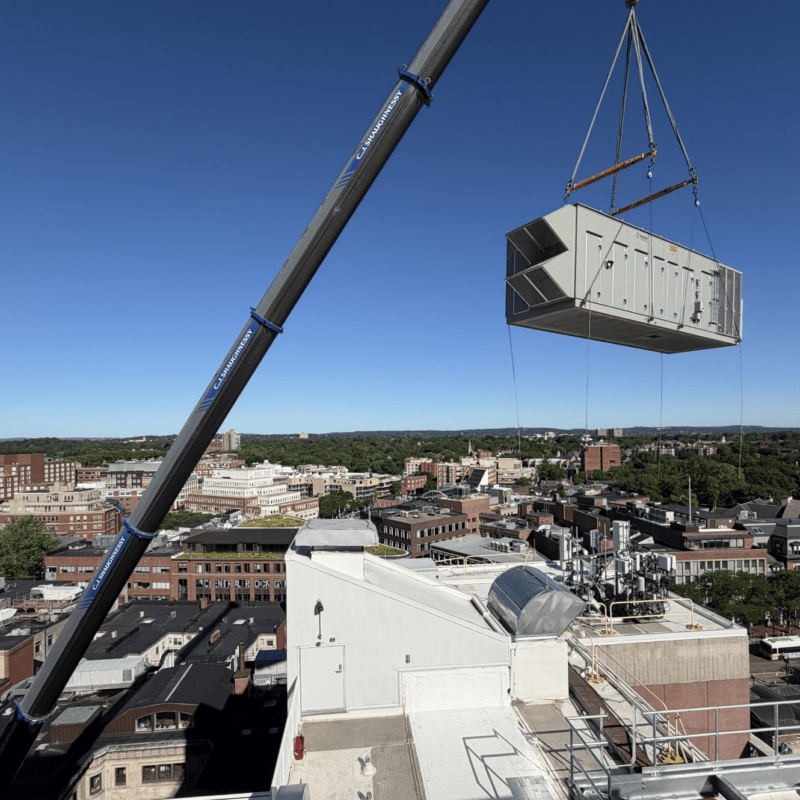
Buildings account for nearly 70% of Boston’s greenhouse gas emissions, making them the single largest source of emissions in the city—and one of our greatest opportunities for climate action. Decarbonizing Boston’s buildings is essential to reaching the City’s goal of reducing community-wide emissions 50% by 2030 and achieving carbon neutrality by 2050. It also creates opportunities for healthier buildings, cleaner air, greater energy efficiency, and more stable long-term operating costs.
Boston has already established one of the country’s most ambitious frameworks for large-building decarbonization through the Building Emissions Reduction and Disclosure Ordinance, or BERDO. BERDO requires large existing buildings to progressively reduce their greenhouse gas emissions, with all covered buildings expected to reach net-zero emissions by 2050. The challenge now is implementation: helping building owners identify the technologies, financing strategies, operational changes, and partnerships needed to turn these requirements into successful projects.
This is where the GRC and our members have an outsized impact. Through our sector working groups and partnership with the City of Boston, we bring together some of the city’s largest property owners, universities, hospitals, cultural institutions, facilities leaders, and technical experts to share proven approaches, learn from first movers, and address common barriers. By turning individual projects into shared learning, we can help successful strategies travel faster across Boston.
GRC members are already demonstrating what this transition can look like in practice. See examples below of GRC members driving building decarbonization across Boston through our BERDO case studies.
We are also looking beyond individual buildings. Through BosTEN, the GRC is exploring whether major campuses and commercial properties can share clean heating and cooling infrastructure through a thermal energy network—creating another potential pathway to reduce fossil-fuel use while improving efficiency and relieving pressure on the electric grid.
Boston’s higher education institutions are also helping lead this work through the Higher Education Working Group, where members share lessons from complex campus decarbonization projects and collaborate on solutions that can support implementation across the city.
