Boston Area Thermal Energy Network (BosTEN)
THE PROBLEMBoston’s buildings account for approximately 70% of the city’s greenhouse gas emissions, with heating and cooling representing one of the most difficult sources to eliminate. Reaching Boston’s climate goals will require solutions that move beyond individual buildings and create cleaner, more efficient ways to serve entire districts.
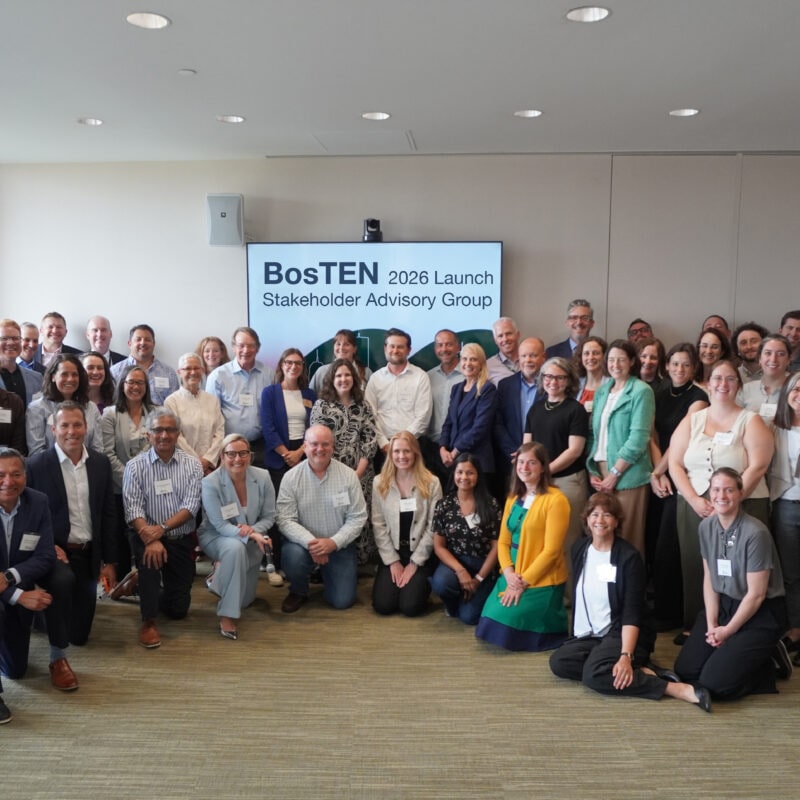
BosTEN—the Boston Area Clean Thermal Energy Network Feasibility Project—is exploring the potential for a shared thermal energy network that could provide heating and cooling across multiple buildings. By connecting institutions with different energy needs, a thermal network can improve efficiency, reduce reliance on fossil fuels, and make use of thermal resources that might otherwise be wasted.
The project grew out of a GRC study tour to Denmark and Germany, where members saw how district-scale thermal systems are supporting decarbonization in cities and communities. With support from the Massachusetts Clean Energy Center, the GRC is now working with Salas O’Brien, participating institutions, technical experts, and public-sector partners to evaluate how a similar model could work in Boston.
BosTEN brings together the scale and expertise of Boston’s institutions to explore a solution that no single building owner could deliver alone. If feasible, the project could:
- reduce emissions from building heating and cooling;
- improve local air quality and support better health outcomes;
- create greater energy-cost stability by reducing exposure to fossil-fuel volatility;
- keep more energy investment within the local economy; and
- establish a model that other cities can adapt.
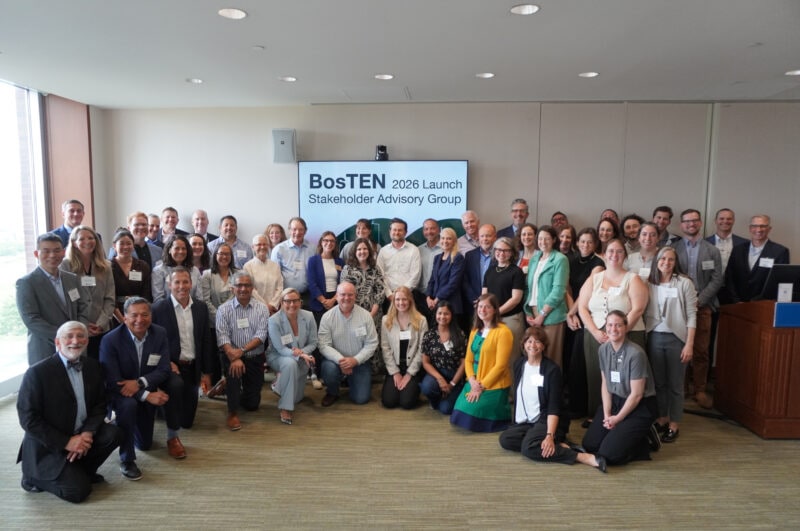
The work is guided by a Stakeholder Committee and Technical Advisory Committee representing the institutional, technical, regulatory, and community perspectives needed to move a complex infrastructure project forward. Together, the project team is assessing potential network configurations, sources and users of thermal energy, costs, governance structures, and pathways toward implementation.

Resources
-
Boston Explores Heat Pumps for District Heating and Cooling Using Local Waterways
-
Boston will study an unlikely heating and cooling source for its buildings: the harbor
-
Boston Harbor’s ‘thermal revolution’ could heat and cool buildings in one of America’s oldest cities
-
Boston Considers Tapping Waterways for Clean Thermal Energy
-
Can thermal energy from Boston Harbor heat and cool city buildings?
Project Updates
Contact
For questions about BosTEN, opportunities to participate, or project updates, contact Johanna Partin at johanna@transformativestrategies.net.
