GRC kicks off Boston Area Thermal Energy Network (BosTEN) project
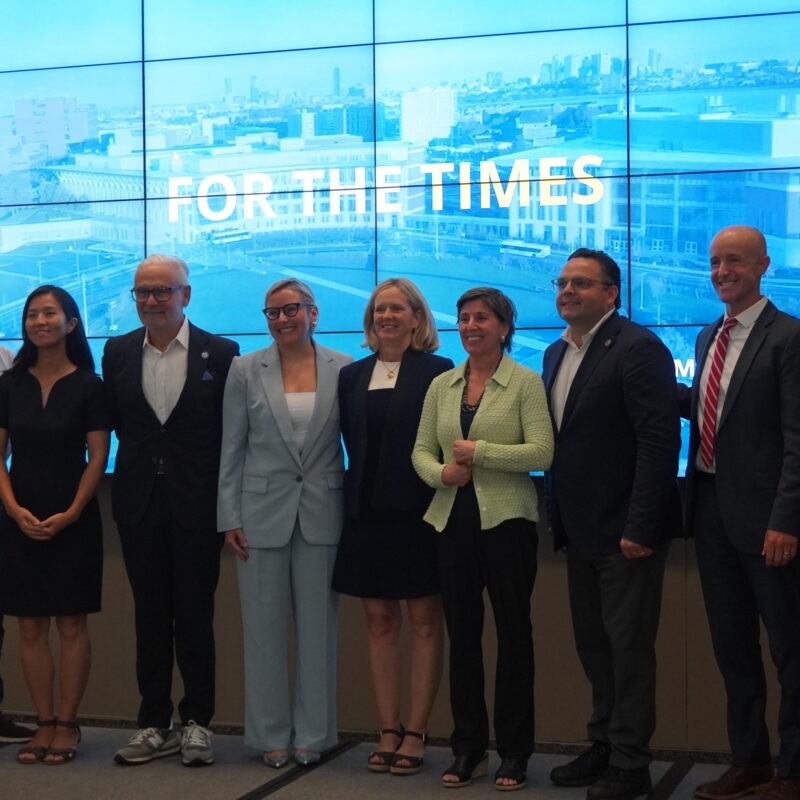
Mayor Wu, Secretary Tepper, Mass CEC CEO Downing, UMass Boston Chancellor Suárez-Orozco join for tour and launch event
BOSTON – The Boston Green Ribbon Commission (GRC), a business membership association that partners with the City of Boston to accelerate climate action, today officially launched its Boston Area Thermal Energy Network (BosTEN) feasibility project. The kickoff event showcased support from key city and state leaders and included a tour of the seawater cooling system at UMass Boston as an example of the possibility of a larger thermal energy network for the Boston region.
The BosTEN project is identifying the most effective ways to use the waters of Boston Harbor, the Fort Point Channel, the Charles and Mystic Rivers, and the bedrock beneath the rivers as a thermal energy source to provide winter heating and summer cooling to universities, hospitals, and other large energy users through a closed-loop network. The year-long project aims to demonstrate how thermal energy networks (TENs) can deliver long-term cost savings, lower emissions, and reduce peak demand on gas and electric infrastructure as Massachusetts transitions to a cleaner and more affordable energy economy.
Joining the GRC for a tour of UMass Boston’s pumped-seawater cooling system, which has been in operation since 1974 and is now being upgraded to provide heat as well and allow UMass Boston to phase out use of natural gas, were: Boston Mayor Michelle Wu, Massachusetts Energy and Environmental Affairs Secretary Rebecca Tepper, Massachusetts, Clean Energy Center CEO Ben Downing, UMass Boston Chancellor Marcelo Suárez-Orozco, Boston Chief Climate Officer Brian Swett, and State Senator Nick Collins (D-South Boston).
The GRC and its technical team leader on the project, Salas O’Brien, then convened the first four-hour technical working session bringing together engineers and leaders from large energy users including the cities of Boston, Cambridge, Medford, and Somerville, higher education institutions, hospital campuses, utility companies, and large commercial real estate developers.
“After months of pragmatic partnership and planning and a comprehensive and competitive process for selecting our technical team, it’s fantastic to now be actively advancing a revolutionary project to decarbonize large buildings with a clean, renewable, all-local energy source,” said Green Ribbon Commission Executive Director Lindsey Butler. The Green Ribbon Commission’s BosTEN feasibility project is funded by a $500,000 grant from MassCEC, in partnership with the City of Boston.
“Boston’s waterways have defined our city for centuries, and now they can help power our clean energy future,” said Mayor Michelle Wu. “By moving off natural gas toward a shared system that uses local resources, the BosTEN project lays the groundwork for solutions that will help reduce emissions, lower energy costs, and make our City more resilient for generations to come. We’re grateful to our partners for helping to make this innovative project a reality.”
“The BosTENS project will unlock the power of the Boston Harbor and lower energy costs and emissions,” said Massachusetts Energy and Environmental Affairs Secretary Rebecca Tepper. “This ambitious initiative could only be accomplished when leading institutions come together and work in partnership with state and city government. The Healey-Driscoll Administration is proud to support this innovative initiative that aims to transform the way we heat and cool buildings in Boston.”
“The collaborative effort behind the BosTEN Project is exactly what Massachusetts needs to keep driving clean energy innovation and solutions,” said Mass Clean Energy Center CEO Ben Downing. “By bringing together major institutions, engineers, and regional and local partners, we will determine how thermal energy networks can transform how we heat and cool some of the area’s largest buildings, reduce pollution, and lower costs.”
“Today’s announcement is both a milestone for UMass Boston and a blueprint for increased climate resilience in Massachusetts,” said UMass Boston Chancellor Marcelo Suárez-Orozco. “Through bold investment and strong public partnerships, we’re demonstrating how large institutions can dramatically cut fossil fuel reliance, lower long-term energy costs, and build a cleaner, more resilient future. We are grateful to Governor Healey, Mayor Wu, the Massachusetts Legislature, and our many other partners.”
“Water-sourced thermal energy networks have tremendous potential to provide affordable renewable energy for some of Boston’s most energy intensive users,” said Brian Swett, Chief Climate Officer for the City of Boston. “I am excited to leverage the expertise of so many major institutional and building owners to further evaluate how the thermal energy in Boston’s harbor and rivers can help us achieve our decarbonization, energy affordability, and climate resilience goals.”
