Coastal Resilience
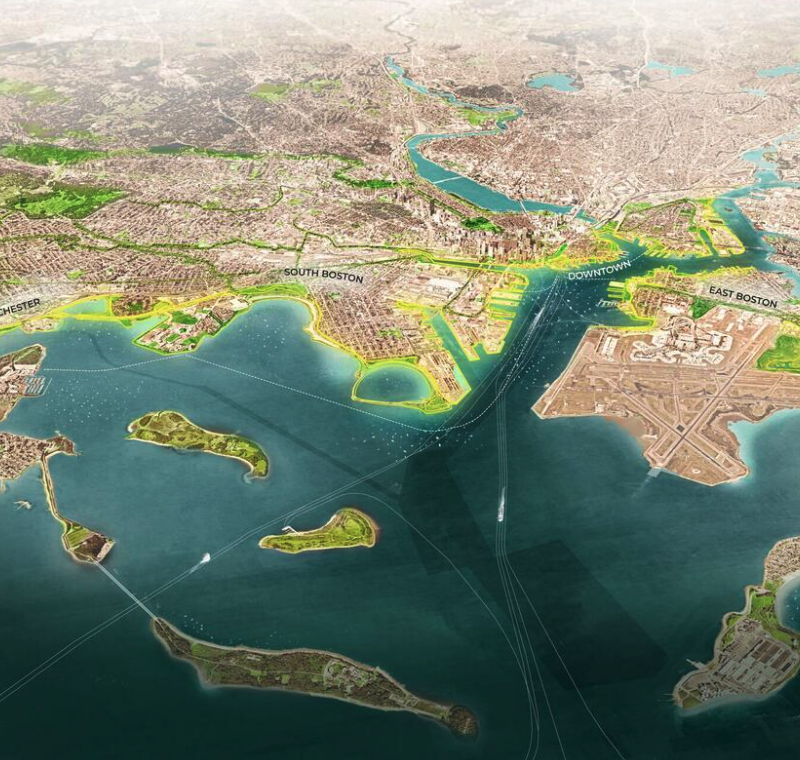
Boston has one of the most vulnerable coastlines in the country. More than 40% of Boston residents live in areas at future risk of coastal flooding, and approximately 20,000 buildings could face severe damage without additional protection. By the 2070s, Boston is planning for roughly 40 inches of sea-level rise. The stakes are significant: without action, the U.S. Army Corps of Engineers estimates the city could experience more than $54 billion in damages before the end of the century.
Boston is also unusually well positioned to act. Through Climate Ready Boston, the City has completed resilience plans for all 47 miles of coastline and is already advancing projects across its five coastal neighborhoods. Those investments protect more than individual properties—they safeguard homes, hospitals, transportation networks, businesses, jobs, public spaces, and the infrastructure that keeps the regional economy moving. Resilience investments can also create new parks and waterfront access, strengthen neighborhoods, and protect Boston’s long-term economic competitiveness. The City’s Coastal Resilience Project Tracker shows the progress already underway across the waterfront.
The next challenge is implementation at scale. The City and the U.S. Army Corps of Engineers are now developing what could become one of the largest coastal flood protection systems in the country. USACE’s Boston Coastal Storm Risk Management Study builds on years of Climate Ready Boston planning and creates a potential pathway to billions of dollars in federal investment. Its interactive Boston Coastal Storm Risk Management Story Map allows users to explore proposed projects by neighborhood and understand how flood risk changes as sea levels rise.
The GRC helps Boston meet this moment by bringing together the institutions, property owners, technical experts, civic leaders, and public agencies whose participation will be essential to getting these projects built. Our work focuses on some of the hardest questions still ahead: how resilience infrastructure is financed, how costs and benefits are shared, how projects are governed and permitted, and how public and private investment can work together.
Through the Coastal Resilience Financial Blueprint, the GRC is developing a strategy to quantify Boston’s funding gap, evaluate financing and revenue options, and build support for the local investment needed to maximize the federal opportunity presented by USACE. The goal is not simply to protect Boston from flooding, but to use resilience investment to create a safer, more accessible, economically vibrant waterfront for generations to come.
Our Coastal Resilience Working Group brings together leaders from across sectors to inform this work, share expertise, and help move Boston’s resilience priorities from planning to coordinated implementation.
